Best Mattress for Side Sleepers: Topper vs New Bed (2026)
Side sleeping loads your shoulder and hip first. If you wake with a dead arm or sore hips, the fix is usually more cradle at those spots—not a firmer “orthopedic” label on the box.
This guide covers when a mattress topper is enough, how thick and soft to go, firmness by body weight, and when the core is too far gone to patch with foam on top.
Jump to firmness by body weight
Mattress topper vs new mattress
- Topper first: the mattress is structurally sound and evenly supportive, but feels too firm on your side, or you need a little extra cradle without buying a whole bed.
- Replace the mattress: deep body impressions, broken edge support, a hammock in the middle, or a core that is too soft for your weight—adding foam on top will still collapse into the dip.
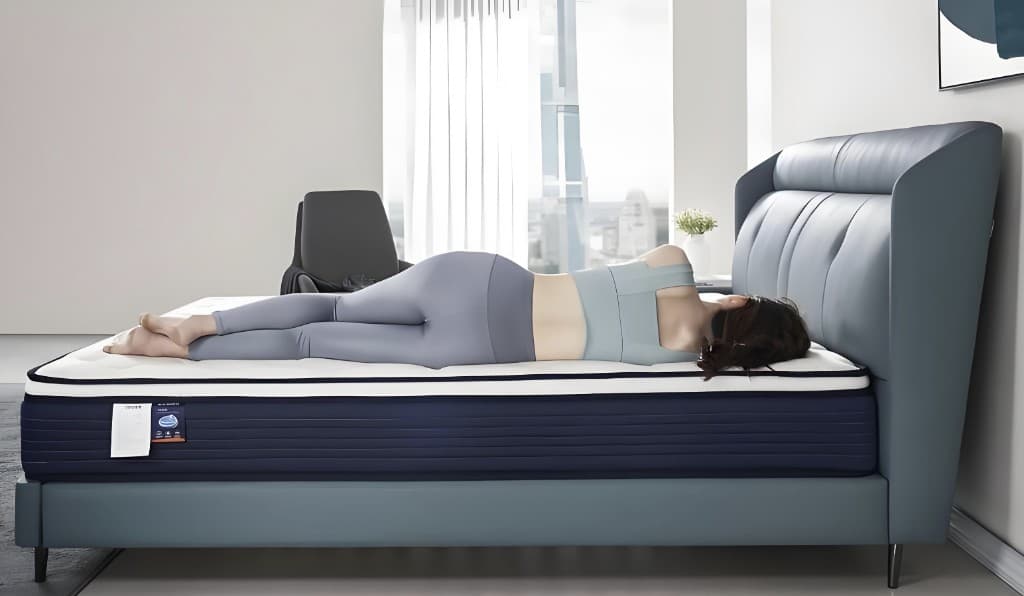
Pressure relief and spinal alignment
On your side, your mattress and topper must do two things at once:
- Pressure relief: Shoulders and hips need room to sink without hitting a hard support layer—especially if you already feel peak pressure on a firm bed.
- Spinal alignment: Hips and shoulders can contour, but your waist still needs support. From behind, your spine should look like a straight horizontal line—not a C-curve or sag at the lower back.
Topper thickness for side sleepers
Most side sleepers who only need surface relief do well with 2 to 3 inches of quality memory foam, latex, or polyfoam. Thinner quilted pads change feel less; thicker slabs can feel boat-like if the mattress below is already soft. A firm base plus a soft topper often mimics a medium-plush built-in comfort stack.
Firmness: the usual side-sleeper mistake
Too firm pushes back on shoulders and hips, curves your spine, and cuts circulation—the “dead arm” feeling. Too soft lets hips drop and pulls your lower back out of line.
On a 1–10 scale, most side sleepers land in medium-soft to medium (about 4–6) for the combined surface they actually lie on—not the label on the box alone.
How body weight changes firmness
What feels like a supportive medium to a 250-pound sleeper can feel like a board to someone at 120 pounds. Use your weight band as a starting filter, then confirm on a home trial.
Ideal sleep-surface firmness for side sleepers by body weight
Under 130 lbs
- Ideal firmness
- Soft (3 to 4)
- Why
- Lighter bodies do not sink in easily. You need plush upper layers to contour to your joints and relieve pressure.
130 lbs to 230 lbs
- Ideal firmness
- Medium-Soft to Medium (4 to 6)
- Why
- The standard recommendation. This provides enough sinkage for the shoulders but enough pushback for the waist.
Over 230 lbs
- Ideal firmness
- Medium-Firm (6 to 7)
- Why
- Heavier sleepers will sink through soft foam too quickly. A slightly firmer bed ensures you don't lose spinal alignment.
| Body weight | Ideal firmness for side sleepers | Why |
|---|---|---|
| Under 130 lbs | Soft (3 to 4) | Lighter bodies do not sink in easily. You need plush upper layers to contour to your joints and relieve pressure. |
| 130 lbs to 230 lbs | Medium-Soft to Medium (4 to 6) | The standard recommendation. This provides enough sinkage for the shoulders but enough pushback for the waist. |
| Over 230 lbs | Medium-Firm (6 to 7) | Heavier sleepers will sink through soft foam too quickly. A slightly firmer bed ensures you don't lose spinal alignment. |
Materials that work for side sleepers
- Memory foam: Strong pressure relief at shoulders and hips. Can sleep warm—look for open-cell or gel-infused foams if heat is an issue.
- Latex: Contours with more bounce and natural cooling—common in premium toppers.
- Hybrid: Coils for lift and airflow plus thick foam tops—often easier if you move a lot or run warm. Compare memory foam and hybrid for side sleepers.
- Innerspring: Thin comfort layers rarely cushion side-sleeping joints—usually a poor fit unless the pad stack is unusually thick.
Before you buy
- Zoned support: Softer shoulders and firmer hip zones can help side sleepers who need both pressure relief and waist lift.
- Sleep trials: Give your body 30–60 nights on a new mattress; favor brands with at least 100-night returns. Topper trials matter too.
- Pillow loft: Side sleepers need enough height to fill the neck-to-mattress gap. A great surface cannot fix a pillow that tilts your head up or down.
Frequently asked questions
- Is a mattress topper enough for side sleepers?
- Yes—when the mattress core is still even and supportive but feels too firm on your shoulders and hips. A 2–3 inch memory foam, latex, or polyfoam topper often fixes surface pressure without replacing the whole bed. Skip the topper if you have body impressions, hammocking, or broken edge support.
- How thick should a topper be for side sleeping?
- Most side sleepers do well with 2 to 3 inches of quality foam. Thinner quilted pads change feel less; stacks thicker than 3 inches can feel unstable if the mattress below is already soft.
- What firmness is best for side sleepers?
- Aim for medium-soft to medium (about 4–6 out of 10) for the combined sleep surface you lie on. Lighter sleepers often need softer; sleepers over 230 lb usually need medium-firm (6–7) so hips do not over-sink.
- Memory foam or hybrid for side sleepers?
- Memory foam excels at shoulder and hip pressure relief. Hybrids add coil lift and airflow—helpful if you sleep warm or need easier repositioning. See our memory foam vs hybrid comparison tables when you are choosing a full mattress, not just a topper.
- Why do my arms go numb when I sleep on my side?
- Usually too much pressure on the shoulder or a pillow that is too low or too high. Fix the sleep surface firmness first, then use a loftier pillow so your neck stays level with your spine.
For general shopping education only—not medical advice. Talk to a clinician if pain persists.