Buying guide
Tatami Mattress Guide: Thickness, Floor Sleeping & What to Buy (2026)
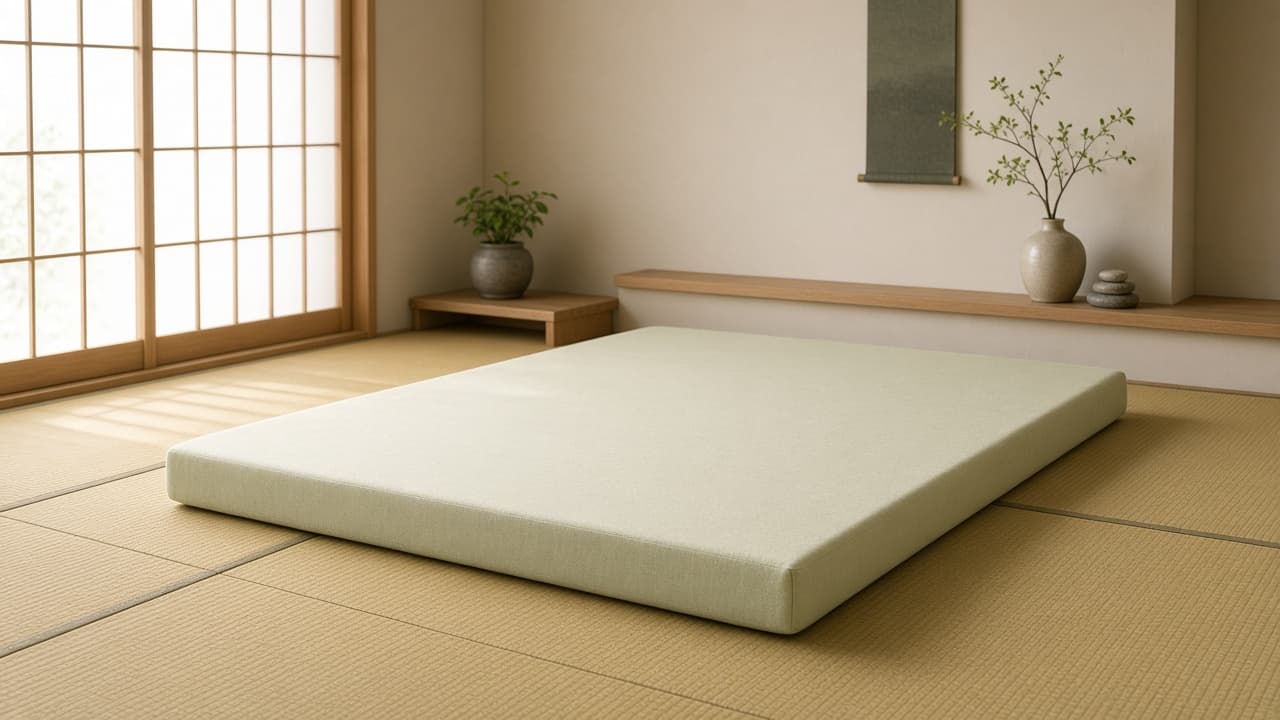
A tatami mattress is the sleep stack you put on a tatami mat, a low platform, or a floor-level frame—usually much thinner than a boxed hybrid. Shoppers searching “tatami mattress” often get mixed results: rush floor mats, Chinese-style storage platforms, and thick foam beds with a Japanese-looking cover.
This guide is the product page for that search: what a tatami mattress is, how thick it should be, how it differs from a tatami mat, and what to check before you buy.
Key takeaways
- ·A tatami mattress is bedding loft. A tatami mat is the floor module underneath. Buy them as two products.
- ·Most floor setups work in roughly 5–10 cm of mattress loft—not a 25–30 cm innerspring.
- ·Latex and firmer foam move easier on the floor; thick memory foam often sleeps hot and hard to sit up from.
- ·Measure the room and mat grid first. Thickness is a second decision, not a substitute for footprint.
What is a tatami mattress?
Call it the comfort layer for floor-level sleeping: a pad or thin mattress designed to sit on tatami, a platform, or a hard floor with a mat underneath. It should let you lie down without sharp pressure, then sit up without fighting a deep sink.
Retail names blur this. Some listings sell a foam mattress in a tatami-print cover. Others sell only the mat and call it a mattress. If the product is 25 cm tall with pocket coils, treat it as a regular mattress—not a tatami mattress.
Tatami mattress vs typical boxed mattress
Typical loft
- Tatami mattress
- About 5–10 cm (sometimes up to ~12 cm on a low platform)
- Boxed mattress
- Often 25–35 cm boxed foam or hybrid
Where it sits
- Tatami mattress
- Rush mat, floor, or low wooden platform
- Boxed mattress
- Bed frame, box spring, or slatted base
Daytime use
- Tatami mattress
- Often folded or left as a sit/sleep surface in one room
- Boxed mattress
- Stays made as a dedicated bed
Partner motion & heat
- Tatami mattress
- Thin stacks dump heat better; motion depends on foam vs latex
- Boxed mattress
- Coils add bounce and airflow; thick foam isolates motion
| Dimension | Tatami mattress | Boxed mattress |
|---|---|---|
| Typical loft | About 5–10 cm (sometimes up to ~12 cm on a low platform) | Often 25–35 cm boxed foam or hybrid |
| Where it sits | Rush mat, floor, or low wooden platform | Bed frame, box spring, or slatted base |
| Daytime use | Often folded or left as a sit/sleep surface in one room | Stays made as a dedicated bed |
| Partner motion & heat | Thin stacks dump heat better; motion depends on foam vs latex | Coils add bounce and airflow; thick foam isolates motion |
Tatami mattress vs tatami mat
The mat is the floor: woven rush (or a synthetic stand-in), a compressed core, and bound edges. It is not meant to replace shoulder cushioning on its own for most side sleepers.
The mattress is what you sleep on: futon-style cotton, latex, or thin foam. Pair a real mat with a thin mattress; do not park a heavy spring unit on rush grass for months.
How thick should a tatami mattress be?
There is no single right number, but floor sleeping penalizes extra loft. Too thick and you fight the stack when sitting; too thin and hips or shoulders hit the mat.
- Back and stomach sleepers: often 5–8 cm of relatively firm loft.
- Side sleepers: often 7–10 cm, or a thin mattress plus a small topper at the shoulder.
- Platforms 15–40 cm high: you can go a little thicker, but you have left traditional floor living.
- Use the thickness calculator with your height, weight, and position—then verify on the actual mat, not a hotel bed.
Materials that work on the floor
- Thin cotton or wool futon pads: traditional, foldable, need regular airing.
- Latex: buoyant, easier to move on than slow memory foam; pairs well with low profiles.
- Firm polyfoam: budget option if density is honest and the slab is not a marshmallow.
- Thick memory foam or tall hybrids: usually the wrong physics for floor sitting and rush-mat care.
Buying checklist
- Write down length × width to match your mat grid or platform—not a vague “queen tatami.”
- Confirm loft in centimeters and whether the cover is removable.
- Check return policy; bulky floor pads are expensive to ship back.
- Plan the mat separately if you do not already own one.
- If you sleep hot or share the bed, read foam vs hybrid only after loft is decided.
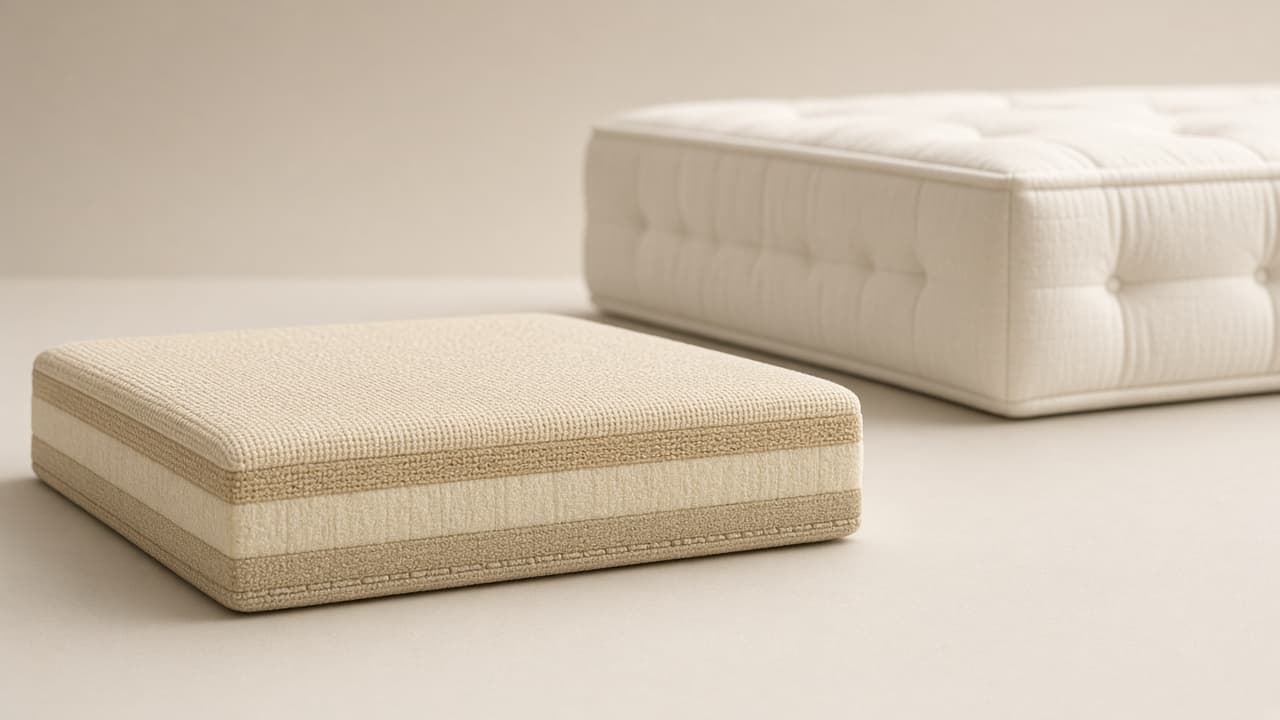
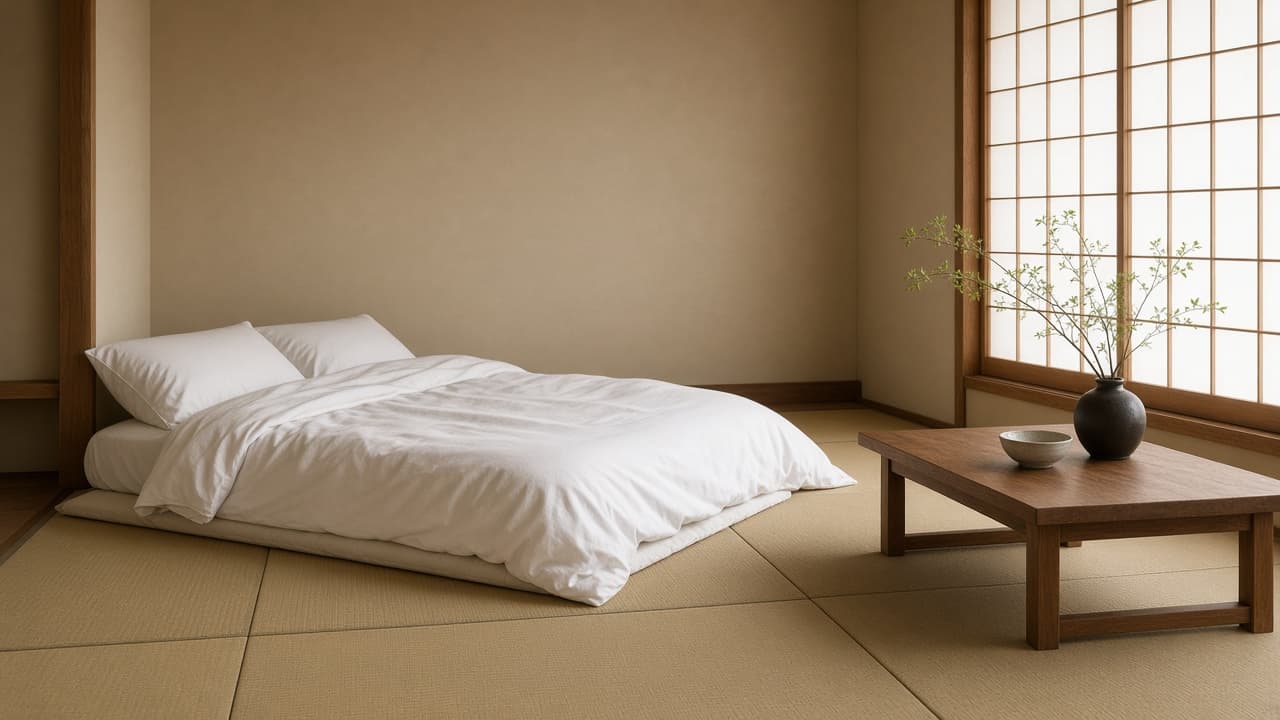
Visual reference
Floor-level loft versus the tall boxed beds most ads still show.
Frequently asked questions
- What is a tatami mattress?
- A low-profile mattress or futon-style pad made for floor or platform sleeping on tatami. It is thinner than a typical boxed mattress and should not be confused with the rush mat underneath.
- Is a tatami mattress the same as a tatami mat?
- No. The mat is the floor surface. The mattress is the bedding loft you put on top. Our tatami mat guide covers weave and care; this page covers sleep thickness and feel.
- Can I use a regular mattress on tatami?
- A thick spring or hybrid mattress traps moisture and point-loads the mat. Short guest use is one thing; long-term floor sleeping needs a thin stack and a dry room.
- What thickness is best for floor sleeping?
- Many adults land around 5–10 cm depending on position and weight. Side sleepers usually want a bit more loft than back sleepers. Size the room first, then use the calculator as a filter.
- Is latex or memory foam better for a tatami mattress?
- Latex is usually easier to sit up from and sleeps a bit cooler in thin builds. Memory foam can relieve pressure but often feels stuck on the floor. Match the material to how you get in and out of bed, not the cover pattern.
- Japanese tatami or Chinese-style platform—does it change the mattress?
- Yes. Authentic Japanese mats want a thin futon. A raised Chinese-style platform behaves more like a low bed frame and can take a thicker mattress. Compare both in our tatami types guide.