Introduction & review
Tatami Mat Guide & Review: Materials, Feel, and What to Buy (2026)
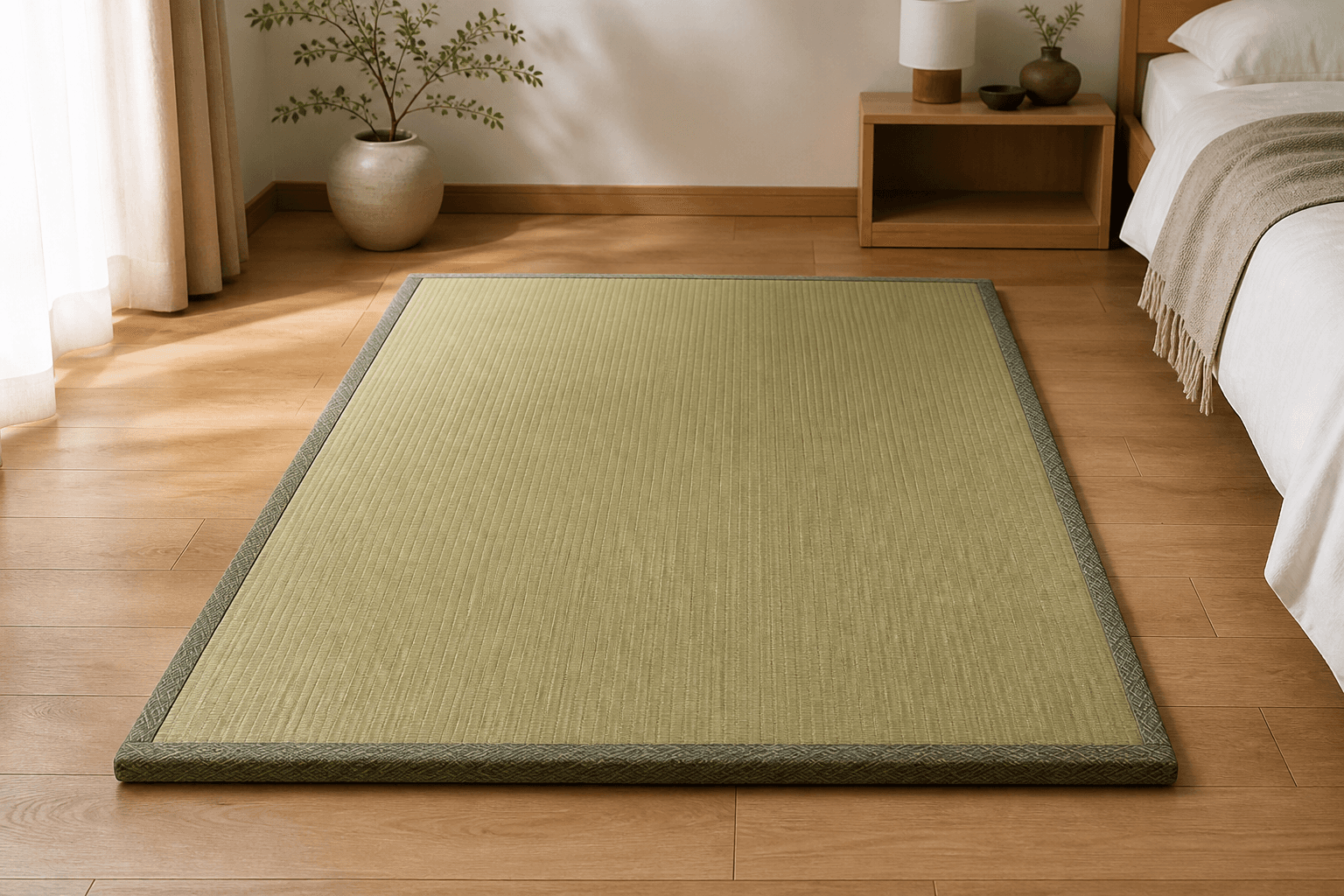
A tatami mat is a low-profile floor surface—traditionally woven rush over a compressed core—used for sitting, sleeping, and low-table living. Online listings blur the term: you will see authentic Japanese floor modules, foldable rush pads, EVA puzzle tiles, and foam-topped “tatami mattresses” that behave nothing like the real thing.
This guide introduces what tatami mats are, how we review them for shoppers, and what to verify before you buy—whether you want floor sleeping, a meditation zone, or a Japanese-inspired room without importing full-room installations.
Key takeaways
- ·Match the product to the job: modular floor mat, room-sized install, or thick “tatami mattress” are different categories.
- ·Rush grass breathes and smells grassy when new; synthetics are easier to wipe but sleep hotter and feel less giving.
- ·Pair thin futons or low loft with real rush mats—heavy spring cores belong on platforms or bed frames.
- ·Humidity, sunlight, and mites matter: plan airing, vacuuming, and a dry room or budget for shorter lifespan.
Tatami product types: know what you are buying
Stores reuse the word tatami for four different categories. Match the listing to your room plan before you read star ratings.
Tatami product types compared
Authentic rush floor mat
- Best for
- Floor sitting, tea corners, traditional layouts, thin futon sleeping
- Tradeoffs
- Needs dry air, gentle cleaning, and respect for weight limits; not a wet-room product
Foldable / portable rush pad
- Best for
- Renters, yoga, guest floor beds, temporary Japanese-style zones
- Tradeoffs
- Often thinner core; crease lines; quality varies wildly between brands
Synthetic tatami-style tile
- Best for
- Kids play areas, easy wipe-down, budget modular flooring
- Tradeoffs
- Little grass scent or give; can feel plasticky; not traditional floor sleeping feel
Tatami-topped foam mattress
- Best for
- Shoppers who want a bed height with tatami look
- Tradeoffs
- Usually not interchangeable with real mats—evaluate as a mattress, not floor culture
| Type | Best for | Tradeoffs |
|---|---|---|
| Authentic rush floor mat | Floor sitting, tea corners, traditional layouts, thin futon sleeping | Needs dry air, gentle cleaning, and respect for weight limits; not a wet-room product |
| Foldable / portable rush pad | Renters, yoga, guest floor beds, temporary Japanese-style zones | Often thinner core; crease lines; quality varies wildly between brands |
| Synthetic tatami-style tile | Kids play areas, easy wipe-down, budget modular flooring | Little grass scent or give; can feel plasticky; not traditional floor sleeping feel |
| Tatami-topped foam mattress | Shoppers who want a bed height with tatami look | Usually not interchangeable with real mats—evaluate as a mattress, not floor culture |
What is a tatami mat?
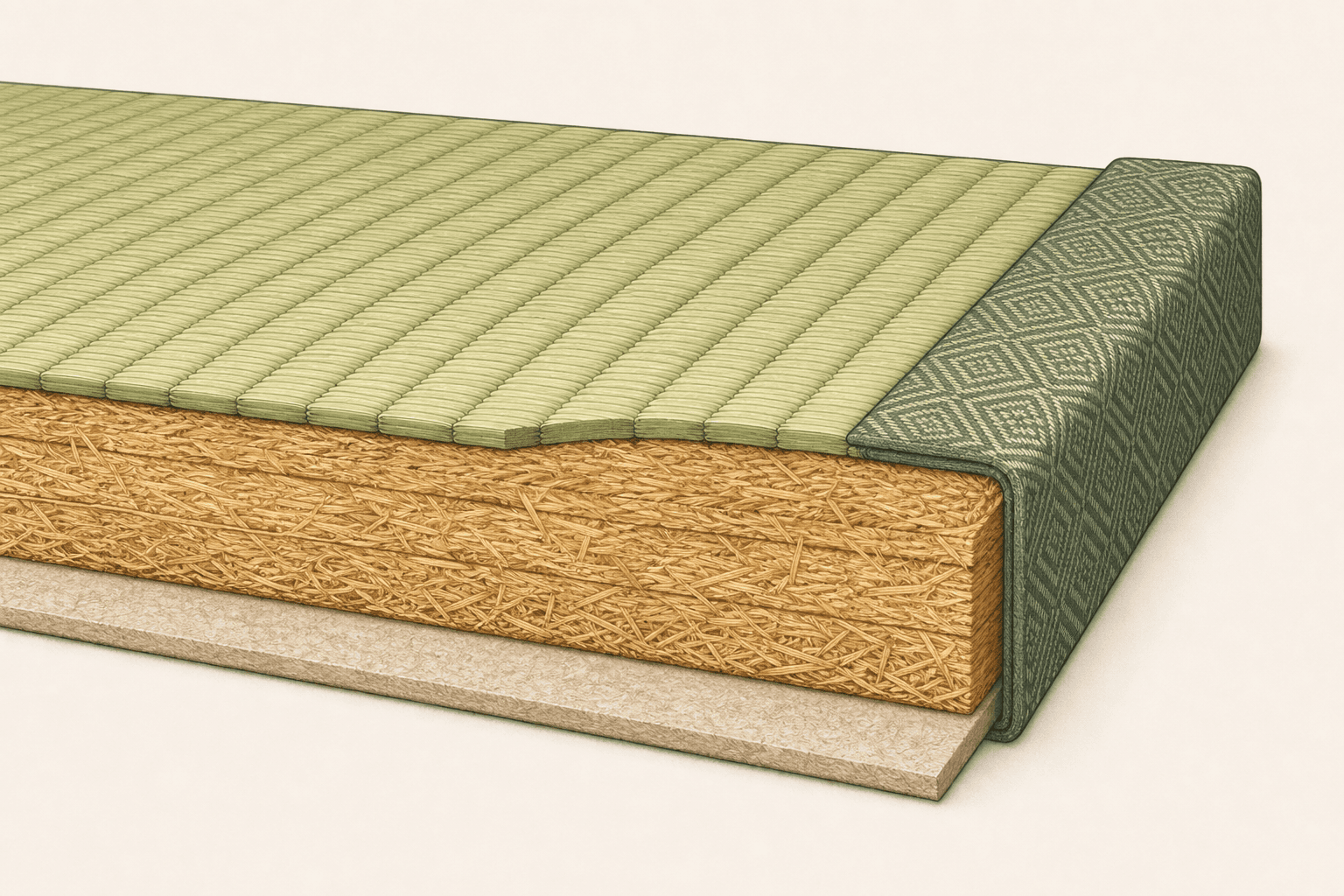
At its core, a tatami mat is a rectangular floor module: woven plant fiber on top, compressed material in the middle, fabric binding around the edge. In Japan, multiples lock into a room-sized grid that effectively becomes the floor. Abroad, most buyers start with one or two standalone mats for floor sleeping, stretching, or a low table zone.
Do not assume every product labeled “tatami” shares that build. Foam mattresses with tatami-print covers, EVA puzzle mats, and raised storage platforms all borrow the name. Our reviews treat them as separate categories even when stores mix them on one landing page.
How we review tatami mats
We evaluate listings the way a careful shopper would after unboxing—material honesty, stated dimensions, edge build, and whether marketing photos show realistic sleep pairings. When we cannot test a sample in person, we score clarity of specs, return windows, and consistency between photos and described materials.
- Material truth: rush vs synthetic face, core type, and thickness in centimeters—not vague “premium feel.”
- Floor performance: flat lay on hard surfaces, corner stability, and slip when stepped on with socks.
- Sleep suitability: recommended loft, pressure on hips/shoulders with thin futons, and heat retention.
- Durability signals: binding stitch density, core rebound after compression, and care instructions.
- Value context: price per square meter vs modular size, shipping bulk, and expected lifespan.
Tatami mat review checklist
Tatami mat review checklist
Face material
- Look for
- Tight, even rush weave; consistent color; stated origin if you care about craft sourcing
- Red flags
- Printed grass pattern on vinyl, loose strands, strong chemical odor out of the bag
Core & thickness
- Look for
- Compressed fiber or straw core around 3–6 cm for floor modules; firm, flat under hand pressure
- Red flags
- Hollow feel, cardboard-like crunch, or visible glue blobs at edges
Edge binding
- Look for
- Straight stitching, no fraying, square corners that sit flat on hard floors
- Red flags
- Bulging corners, detached binding after unboxing, mats that rock when stepped on
Size & modularity
- Look for
- Standard modules if you plan a grid; exact cm specs if you are filling an alcove
- Red flags
- Vague “queen size tatami” labels with no dimensions; non-square rooms forced into one slab
Breathability & smell
- Look for
- Natural grass scent that fades in days; airflow when lifted from floor
- Red flags
- Musty damp smell on arrival, mildew spots, mats that never dry after wiping
Sleep pairing
- Look for
- Thin futon, foldable floor pad, or low latex topper under ~8 cm loft
- Red flags
- Marketing photos with 14-inch hybrid mattresses directly on rush—bad for mat longevity
| Criterion | What to look for | Red flags |
|---|---|---|
| Face material | Tight, even rush weave; consistent color; stated origin if you care about craft sourcing | Printed grass pattern on vinyl, loose strands, strong chemical odor out of the bag |
| Core & thickness | Compressed fiber or straw core around 3–6 cm for floor modules; firm, flat under hand pressure | Hollow feel, cardboard-like crunch, or visible glue blobs at edges |
| Edge binding | Straight stitching, no fraying, square corners that sit flat on hard floors | Bulging corners, detached binding after unboxing, mats that rock when stepped on |
| Size & modularity | Standard modules if you plan a grid; exact cm specs if you are filling an alcove | Vague “queen size tatami” labels with no dimensions; non-square rooms forced into one slab |
| Breathability & smell | Natural grass scent that fades in days; airflow when lifted from floor | Musty damp smell on arrival, mildew spots, mats that never dry after wiping |
| Sleep pairing | Thin futon, foldable floor pad, or low latex topper under ~8 cm loft | Marketing photos with 14-inch hybrid mattresses directly on rush—bad for mat longevity |
Materials: rush grass vs modern substitutes
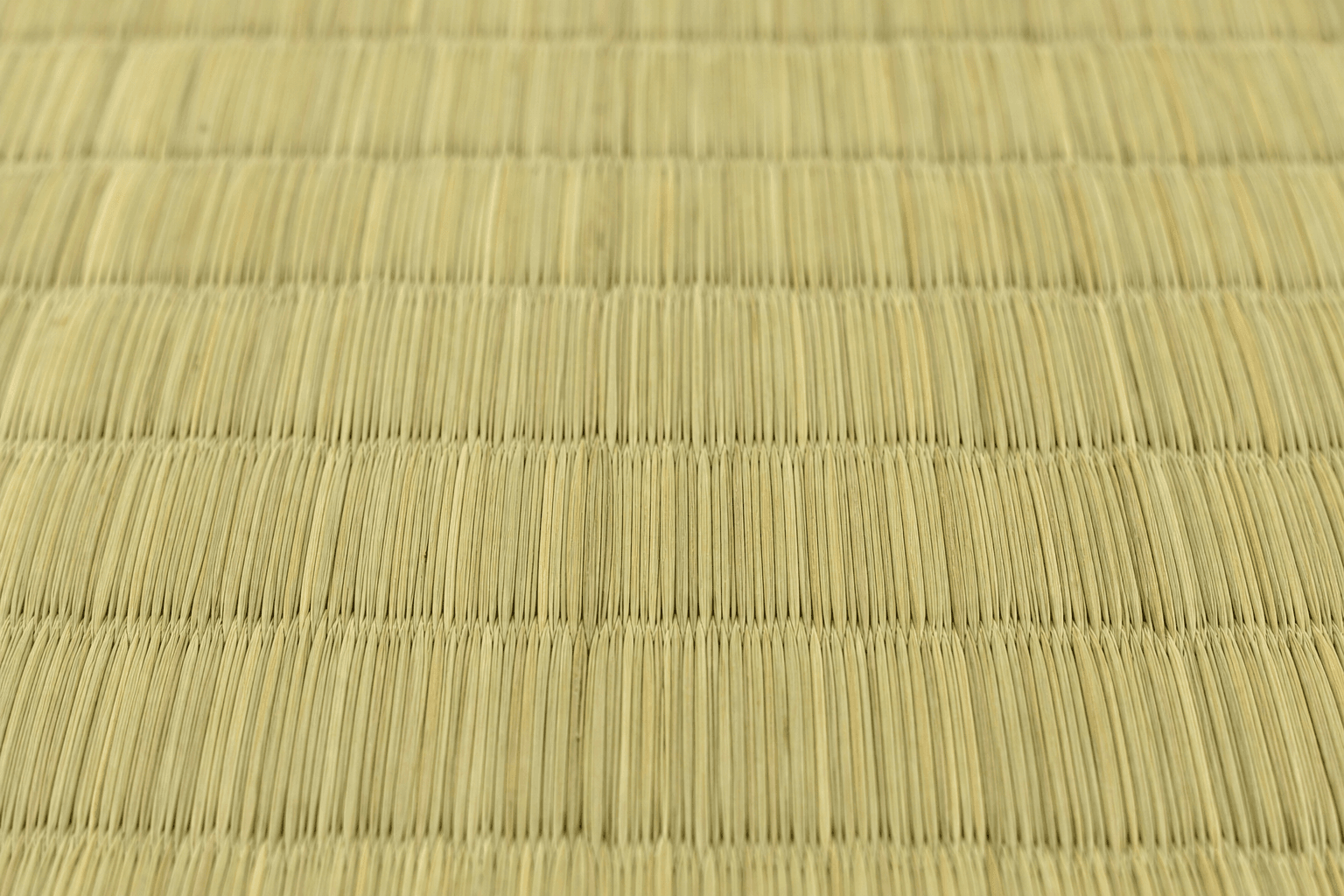
Traditional faces use woven rush (igusa family grasses). They flex slightly, smell grassy when new, and move moisture better than sealed synthetics. Cores were historically packed straw; many export mats now use wood fiber boards or recycled fiber—still fine if flat and dry.
Synthetic faces—PP weave, foam laminates, or vinyl prints—clean faster and cost less. They are reasonable for play mats or decorative covers, but they will not replicate authentic floor-sleeping feel or breathability. We flag listings that hide synthetics behind “tatami style” wording.
Floor sleeping on tatami: what works
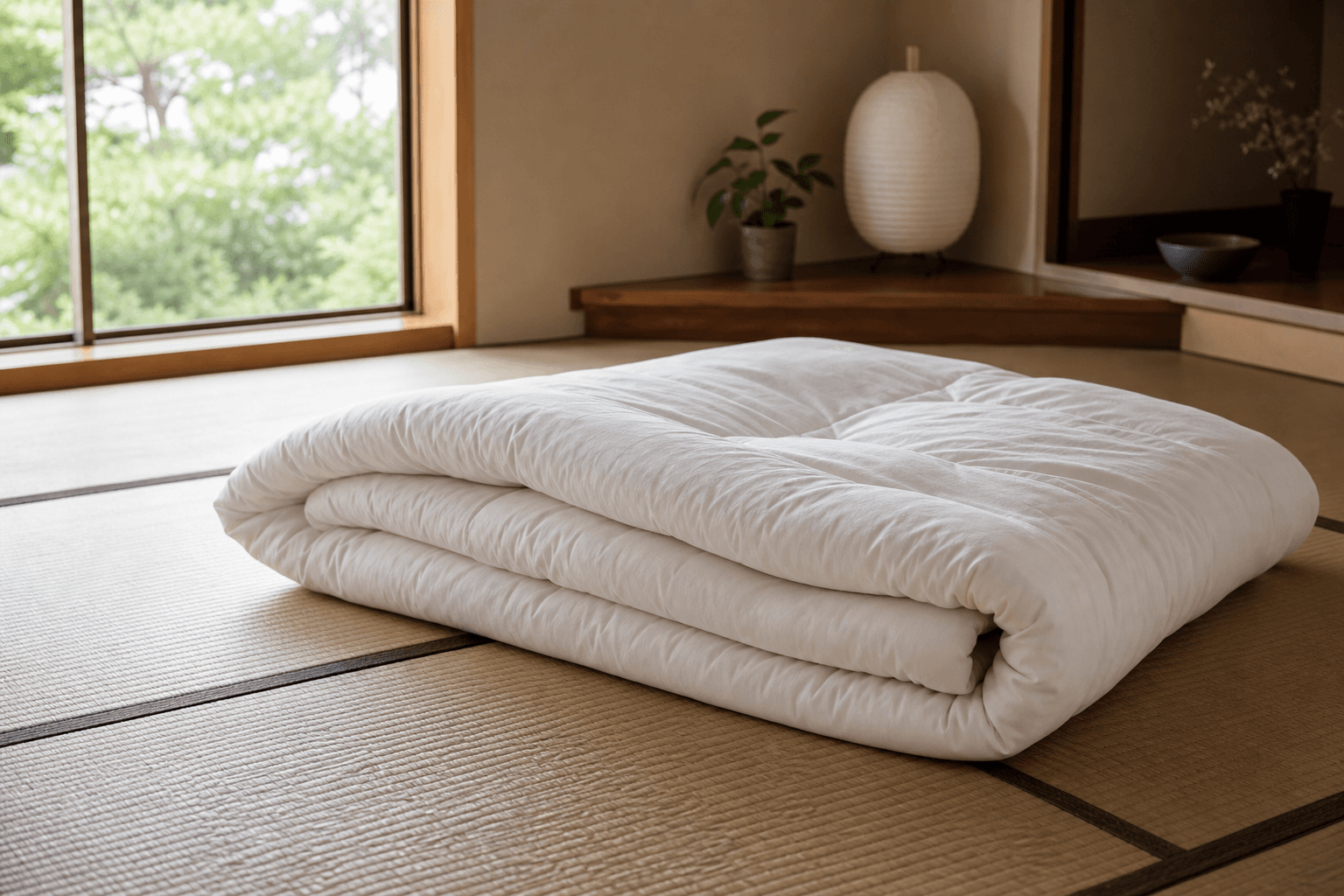
Traditional pairing is a thin futon or foldable pad—total loft often under 8 cm. That keeps weight spread across the mat and lets the rush face breathe. Side sleepers may add a thin topper; back and stomach sleepers often prefer slightly firmer pads.
Avoid placing a boxed 10–12 inch spring or hybrid mattress directly on rush grass long term. Point loads, trapped moisture, and lack of airflow shorten mat life and can mold the core. If you need mattress height, use a platform bed or the tatami-topped mattress category—and judge it as bedding, not floor culture.
Care, humidity, and lifespan
- Vacuum with a soft brush; wipe spills quickly with a barely damp cloth—never soak rush.
- Air mats weekly by lifting them from the floor; run a dehumidifier in damp climates.
- Keep direct sun sessions short to avoid fade; rotate mats if traffic wears one edge.
- Expect roughly 5–10 years from quality rush modules with care; portable pads may wear faster.
Buying checklist before you checkout
- Confirm exact length × width × thickness in cm and whether multiple mats interlock.
- Read face fiber and core material—not just “natural tatami color.”
- Check return policy and who pays return shipping on bulky mats.
- Plan bedding loft separately; do not let mattress marketing override mat limits.
- For whole-room installs, compare with our Japanese tatami guide for authentic module sizes.
Pros and cons at a glance
Pros
- Low profile and modular—fits small rooms and flexible layouts.
- Rush surfaces breathe better than solid foam on hard floors in many climates.
- Natural give and scent create a distinct floor-sleeping feel many hybrids cannot copy.
- Portable pads let renters experiment without full-room renovation.
Cons
- Real rush needs humidity control, airing, and gentle cleaning—not “mop like tile.”
- Heavy mattresses and sharp furniture legs can dent or tear woven faces.
- Online quality is inconsistent; cheap listings use synthetic faces that sleep hot.
- Lifespan is shorter than a metal bed frame—budget for refresh or re-covering.
Visual reference gallery
Texture, layer build, and realistic sleep pairings—the details we look for when reviewing tatami mat listings.
Frequently asked questions
- What is the difference between a tatami mat and a tatami mattress?
- A tatami mat is a low floor module—usually woven rush over a thin core. A “tatami mattress” is often a thick foam or spring bed with tatami styling. Judge mats for floor use; judge mattresses for sleep support and height.
- Can I sleep directly on a tatami mat?
- Many people sleep on a thin futon or pad placed on the mat, not bare rush. A minimal foldable pad is enough for some back sleepers; side sleepers usually want a bit more loft for shoulder relief.
- How thick should a tatami mat be?
- Floor modules are commonly about 3–6 cm. Thinner portable pads may flex more; very thick foam labeled tatami is usually a mattress category, not a traditional mat.
- Are synthetic tatami mats worth it?
- They can work for play areas, easy-clean zones, or budget setups. For authentic breathability and floor-sleeping feel, woven rush still wins—if you can maintain dry air and gentle cleaning.
- How does tatami compare to sleeping on the floor with a rug?
- A quality mat spreads weight and breathes better than most rugs. Rugs trap heat and lack the structured core; tatami gives a firmer, more even plane for futons.
- Where should I read about Japanese room tatami vs Chinese platforms?
- Start with our tatami types comparison hub—it separates authentic Japanese floor mats from raised storage platforms that share the name overseas.