Japanese floor mats
Japanese Tatami Mats: Authentic Floor Living Guide (2026)
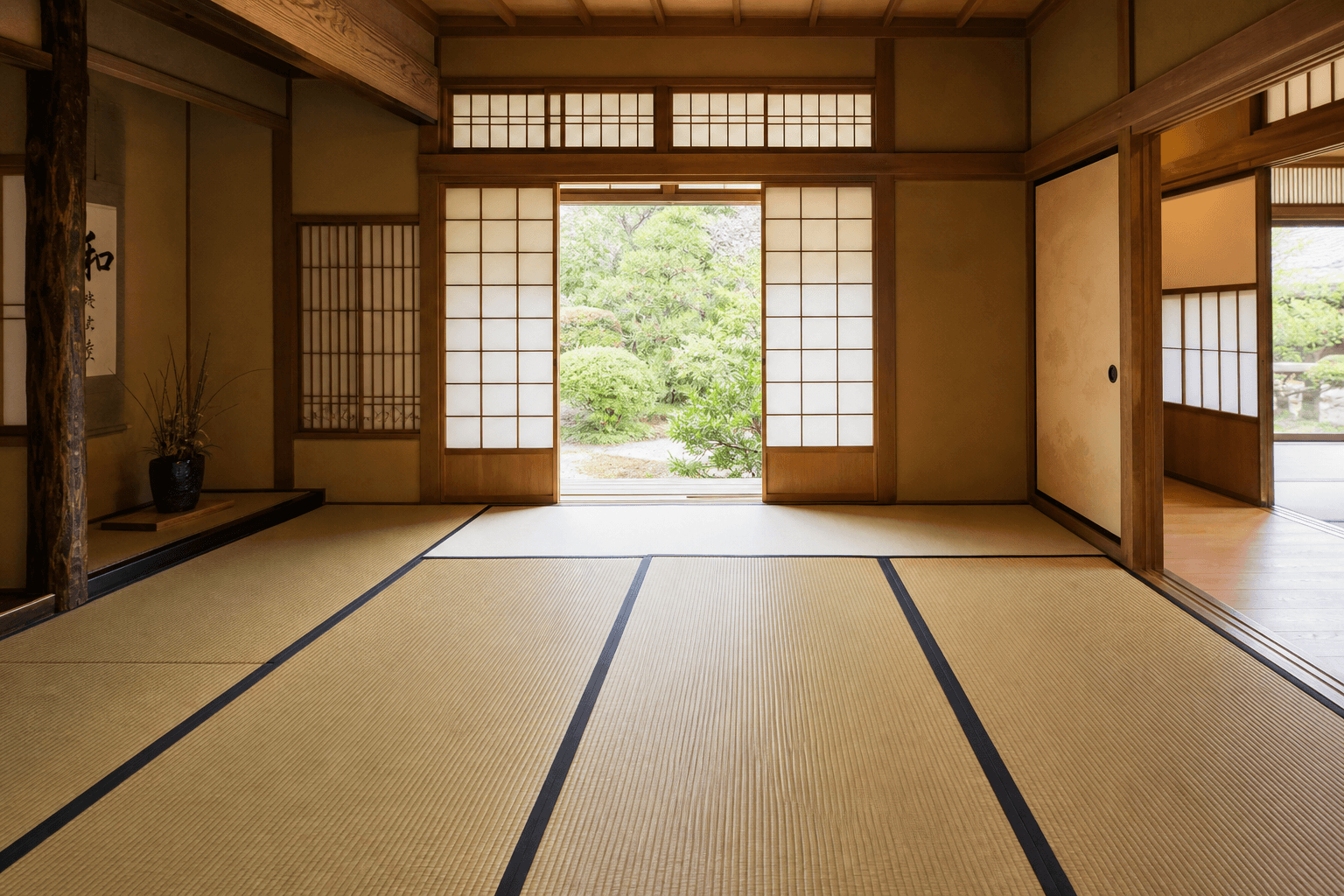
Authentic Japanese tatami is not furniture you buy and place on top of the floor—it is the floor. Rush-grass mats, about five centimeters thick, lock together in a grid inside a traditional Japanese room. You sleep, eat, and receive guests on that same plane; futons fold away by day.
This guide covers how real Japanese mats are built, how rooms are sized in mat modules, daily habits, cultural context, and upkeep—without mixing in the Chinese-style raised storage platform that often shares the word “tatami” overseas.
Key takeaways
- ·Tatami is a building surface: rush face, compressed core, fabric edge—flush with the floor, not a raised box.
- ·Rooms are counted in mats (e.g. six-mat room); Kyoto-region and Tokyo-region modules differ slightly.
- ·Floor-level living: shoes off, thin futon bedding, low tables—thick spring mattresses are not the traditional pairing.
- ·Plan for care: airing, vacuuming, humidity control, and roughly 7–10 years before re-covering worn rush faces.
What authentic Japanese tatami looks like
Rush weave, layer build, floor-level living, and standard mat modules—the visual cues that separate real mats from raised platform “tatami” abroad.
How Japanese tatami evolved
Floor-sitting culture reached Japan from the continent more than a millennium ago and hardened into today’s traditional room type built around interchangeable mats. Unlike modern Chinese-style platforms—a post-2000 custom-furniture trend—Japanese tatami stayed tied to architecture, craft, and daily ritual.
Materials and three-part build
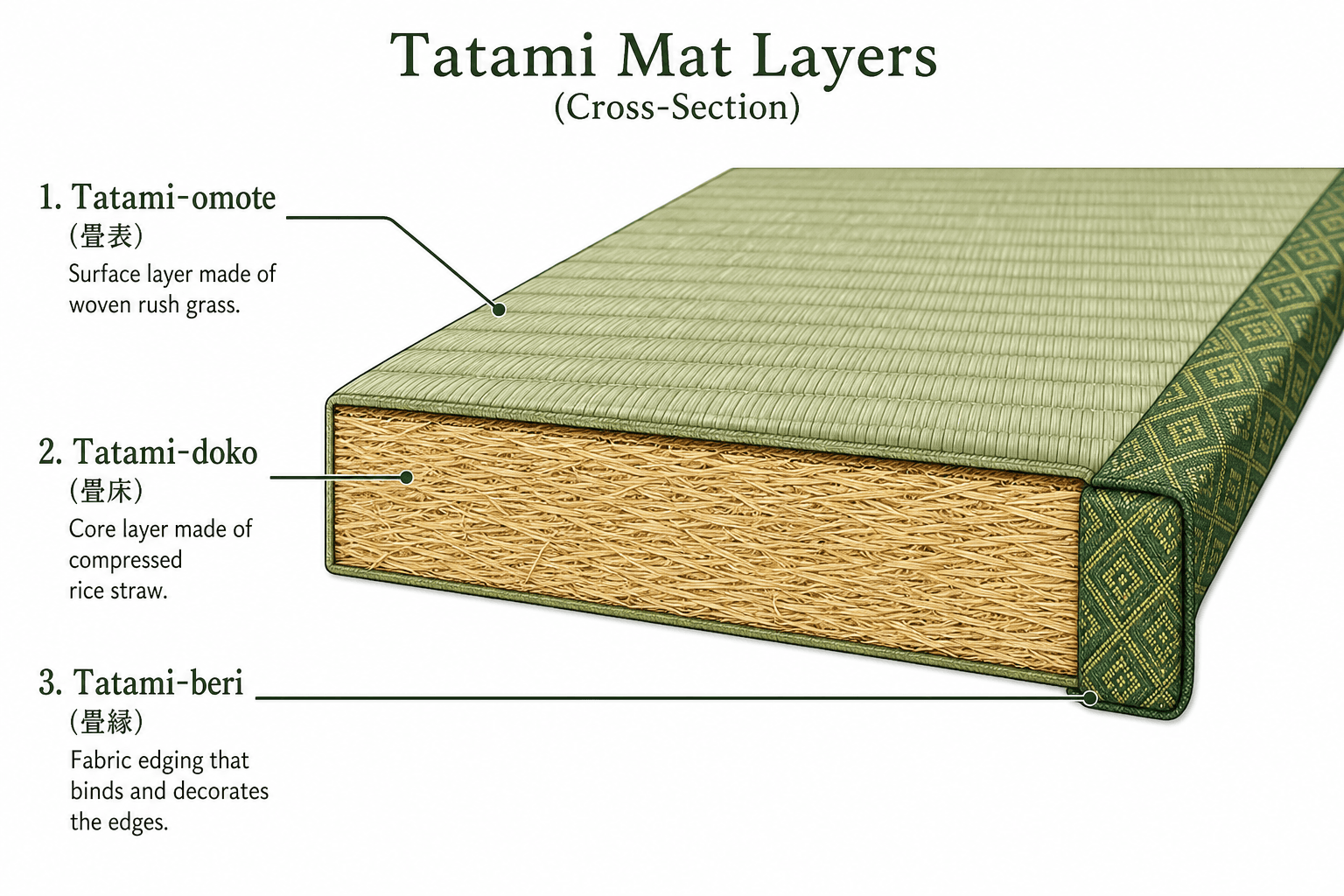
A standard Japanese mat stacks three layers:
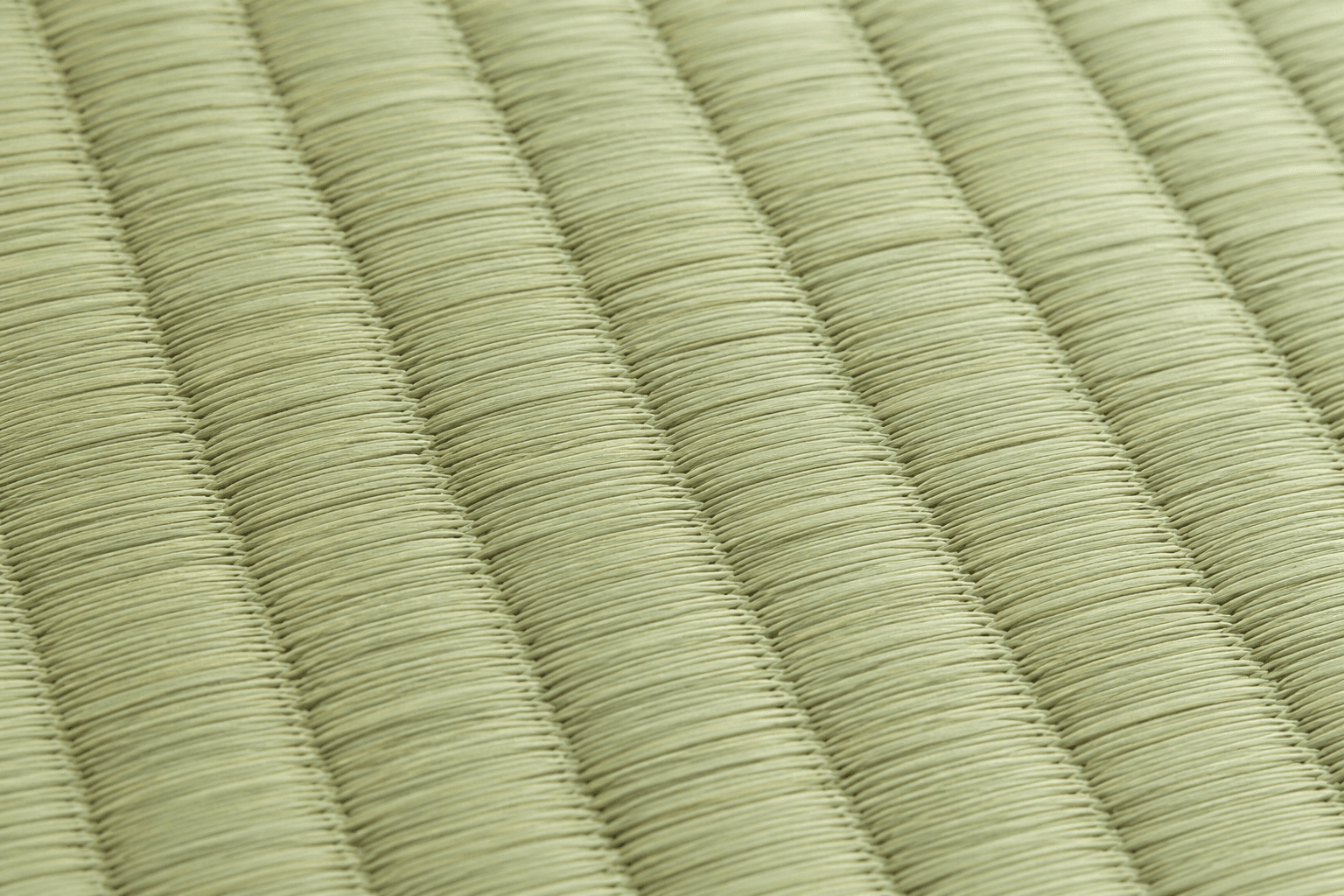
- Rush grass surface: tightly woven rush with a natural scent and breathable hand-feel.
- Compressed core: traditionally packed straw; many modern mats mix wood fiber or synthetics (~5 cm total thickness).
- Fabric edge binding: color and weave signal formality and room character.
- Feel: slight give, humidity buffering—cooler in summer, warmer in winter than bare hard flooring.
Mat sizes and room counting
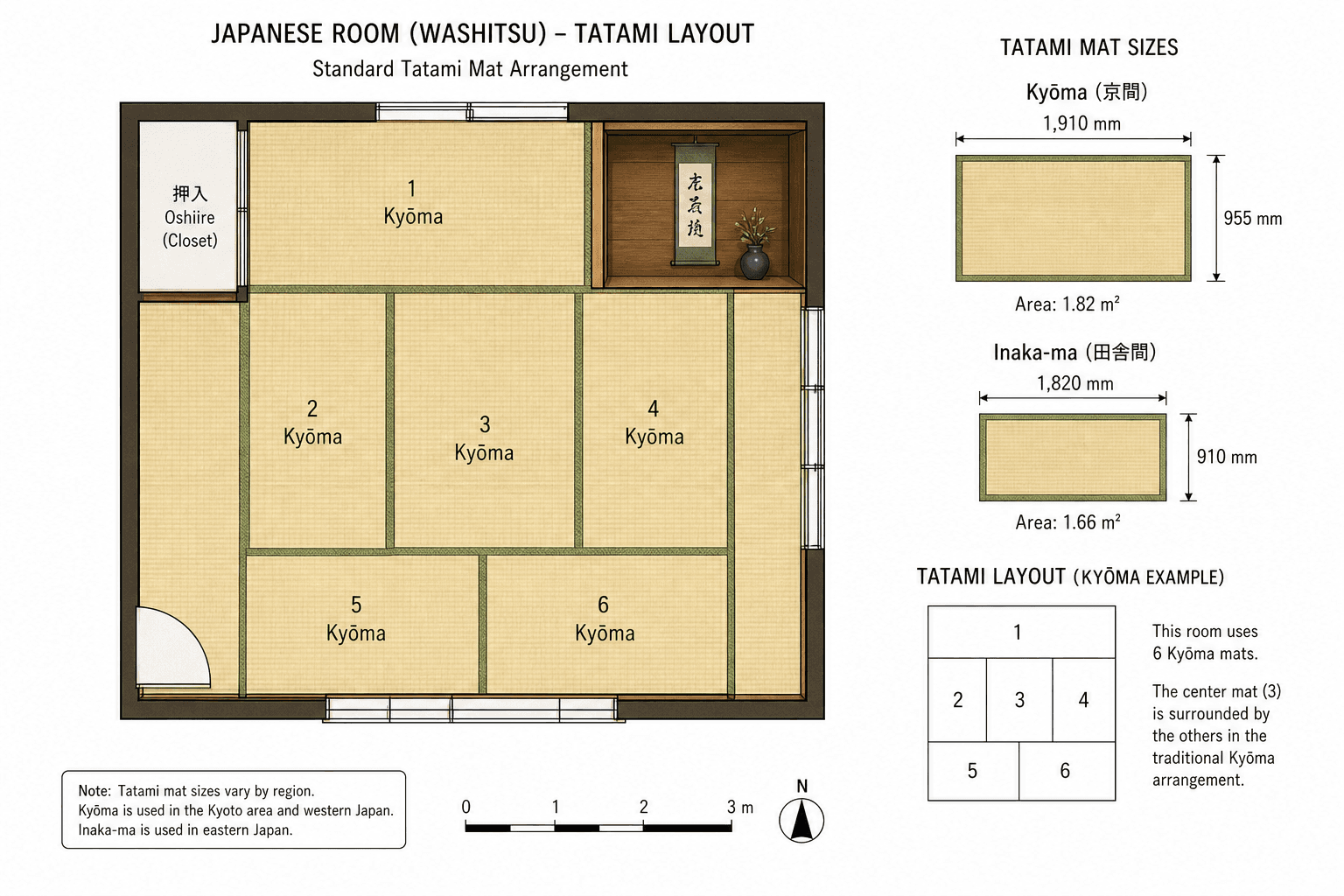
Japanese rooms are often quoted in number of mats—a six-mat room means six standard modules of floor area, not six loose rugs.
- Kyoto-region mat (Kansai): about 91 × 182 cm
- Tokyo-region mat (Kanto): about 88 × 176 cm
- Half mat: about 91 × 91 cm
One room, many uses
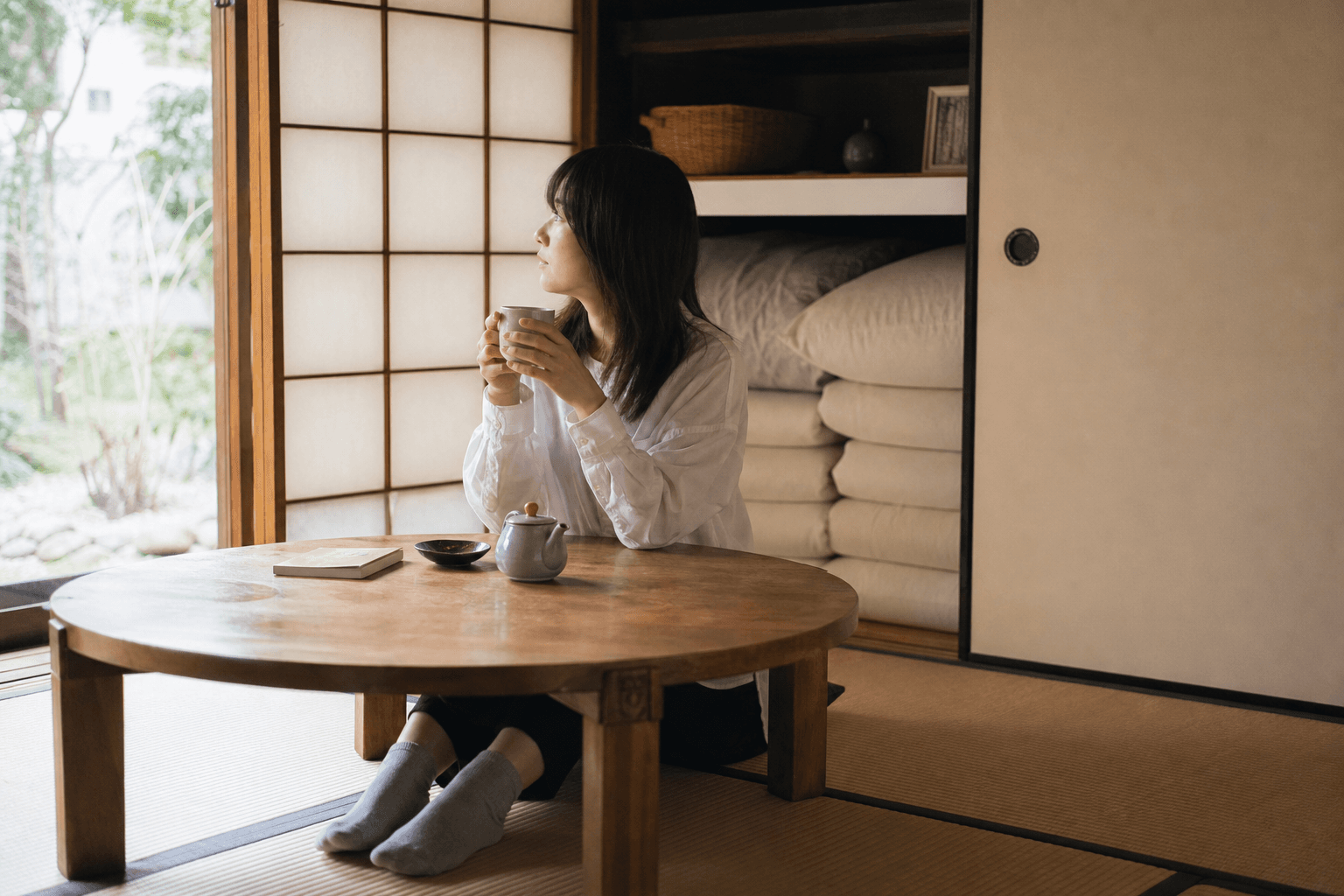
- Sleep, dine, host guests, study, and play on the same floor plane.
- Flexibility is the point: futons stow in closets by day; the room reads as living space.
- Storage lives in built-in wall closets—not inside the mats themselves.
Daily habits on real tatami
- Shoes off before stepping on mats; dirty socks are a faux pas too.
- Sit on the floor with low tables for meals and tea.
- Use thin futon bedding— not a thick spring mattress directly on the rush face.
- Never walk on tatami in outdoor shoes—basic household rule.
Culture, not décor
In Japan, tatami sits inside tea ceremony, seasonal craft, and ideas about restraint and care for the home. It is lived culture—not a texture you paste into a Western bedroom for “Zen minimalism.”
Upkeep and lifespan
- Typical life: about 7–10 years with regular care.
- Air mats when possible, vacuum gently, control dust mites, and keep humidity in check.
- Avoid heavy point loads and prolonged dampness.
- Re-covering the rush face is a real cost when the weave wears through.
Frequently asked questions
- What is authentic Japanese tatami?
- Rush-grass mats that form the floor surface of a traditional Japanese room—roughly 5 cm thick, modular, and meant for barefoot floor living with thin futon bedding.
- Can I put a thick mattress on Japanese tatami?
- Traditional setups use thin futons on the mats. A heavy spring mattress belongs on a platform or bed frame; long-term weight and trapped moisture can damage real tatami.
- What size is a tatami mat in Japan?
- Standard modules differ by region—common examples are Kyoto-region mats about 91×182 cm and Tokyo-region mats about 88×176 cm. Room sizes are often quoted in number of mats.
- How long do Japanese tatami mats last?
- With airing, cleaning, and humidity control, expect roughly 7–10 years before the rush face needs re-covering or replacement.
- Is Japanese tatami the same as a Chinese tatami platform?
- No. Japanese tatami is the floor itself. Chinese-style platforms are raised wooden boxes with storage and a mattress on top—different product under a similar name.